
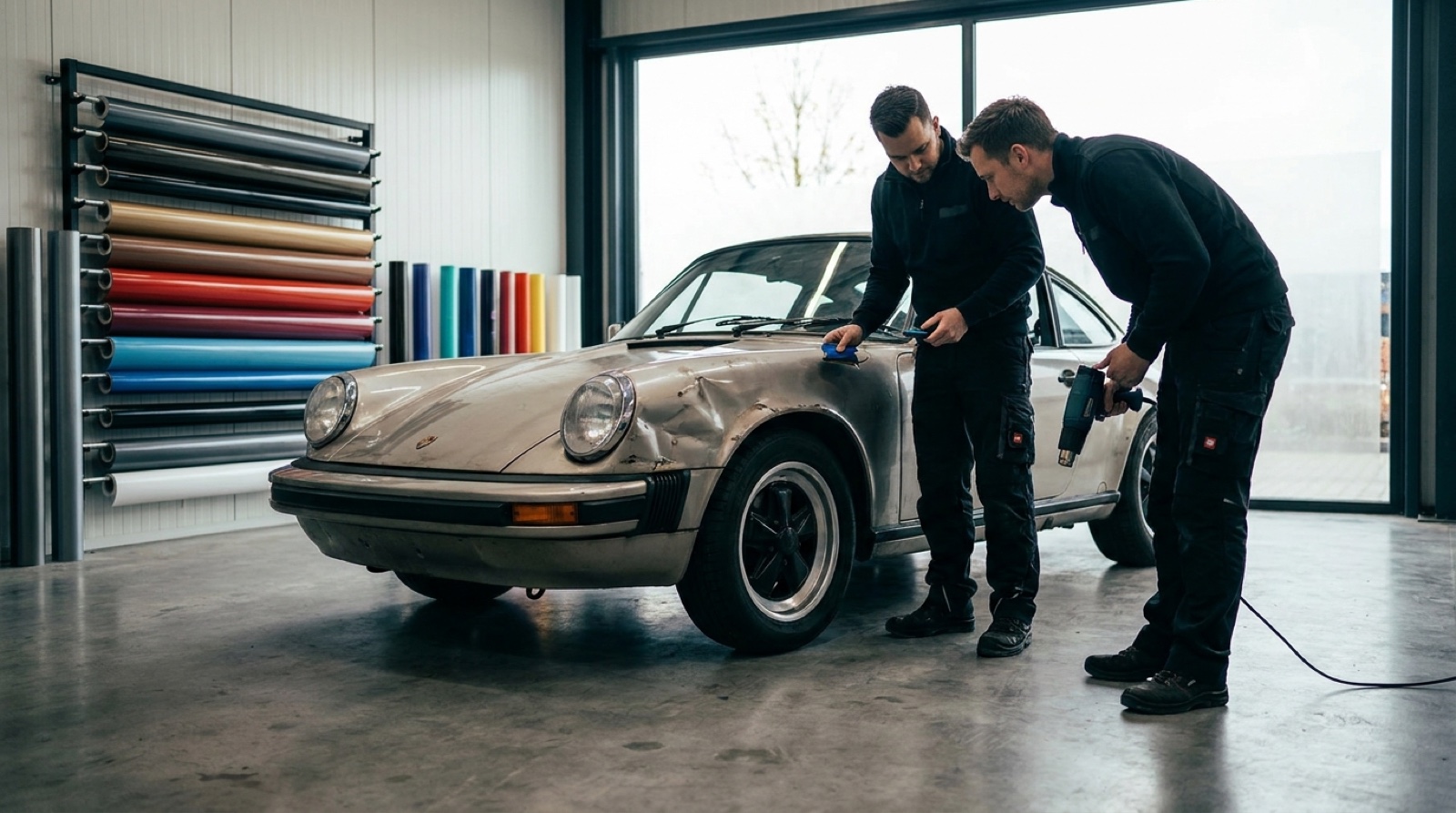
Wrapping over body damage or failing paint is a mistake that catches up with you quickly, and it's one of the most common things we see on vehicles that come in after a bad experience with a cheaper shop. The honest answer: it depends on the type and severity of the damage, and a good installer will tell you exactly which issues need addressing before a wrap goes on.
Vinyl wrap conforms to the surface beneath it. That's the technology's strength when it comes to complex curves, and it's also why it can't hide what's below. A wrap does not fill dents, fill scratches, or bridge over rough texture. If anything, certain finishes, particularly matte and satin, can make surface imperfections more visible by eliminating the reflective distraction of gloss paint.
Very minor door dings, shallow with no paint damage, can often be wrapped over with acceptable results depending on location and finish. A tiny shallow ding on a lower door panel under a full gloss wrap may be barely perceptible. That same ding under a matte or satin finish will stand out more.
Any dent with creased metal, paint chipping, or bare metal exposure should be addressed before wrapping. Wrapping over a deep dent doesn't hide it, it covers it with a vinyl surface that sits in the same shape as the dented panel, so the shadow and contour are still plainly visible. Paintless dent repair (PDR) is typically the right first step for minor dents before a wrap installation.
This is the more important of the two considerations. The wrap's adhesive bonds to the paint surface, so the quality and stability of that paint determines everything. Here's what we look for:
Before any car wrap installation, we do a surface inspection. We're looking at paint condition panel-by-panel, noting any areas of concern, and having a conversation with you about what needs to be addressed. We'd rather send you to a body shop for a panel fix than have you drive away with a wrap that fails in six months.
If only one or two panels have issues, we may recommend addressing those while wrapping the rest of the vehicle. A partial wrap focusing on the panels in good condition can sometimes be the practical solution.
Our workmanship warranty covers defects in material and installation, it cannot cover wrap adhesion failure caused by pre-existing paint issues. This is why we document surface condition before installation. If we flag a problem and proceed at the customer's request, that area is noted as-is. It's a standard position in the industry; any shop that offers a warranty without inspecting the surface first isn't being straight with you.
Questions about your vehicle's surface condition before booking? Send us photos or bring it by and we'll give you an honest assessment before you commit to anything.
Not sure if your paint is wrap-ready?
Bring it in and we'll do a surface check before any money changes hands.