
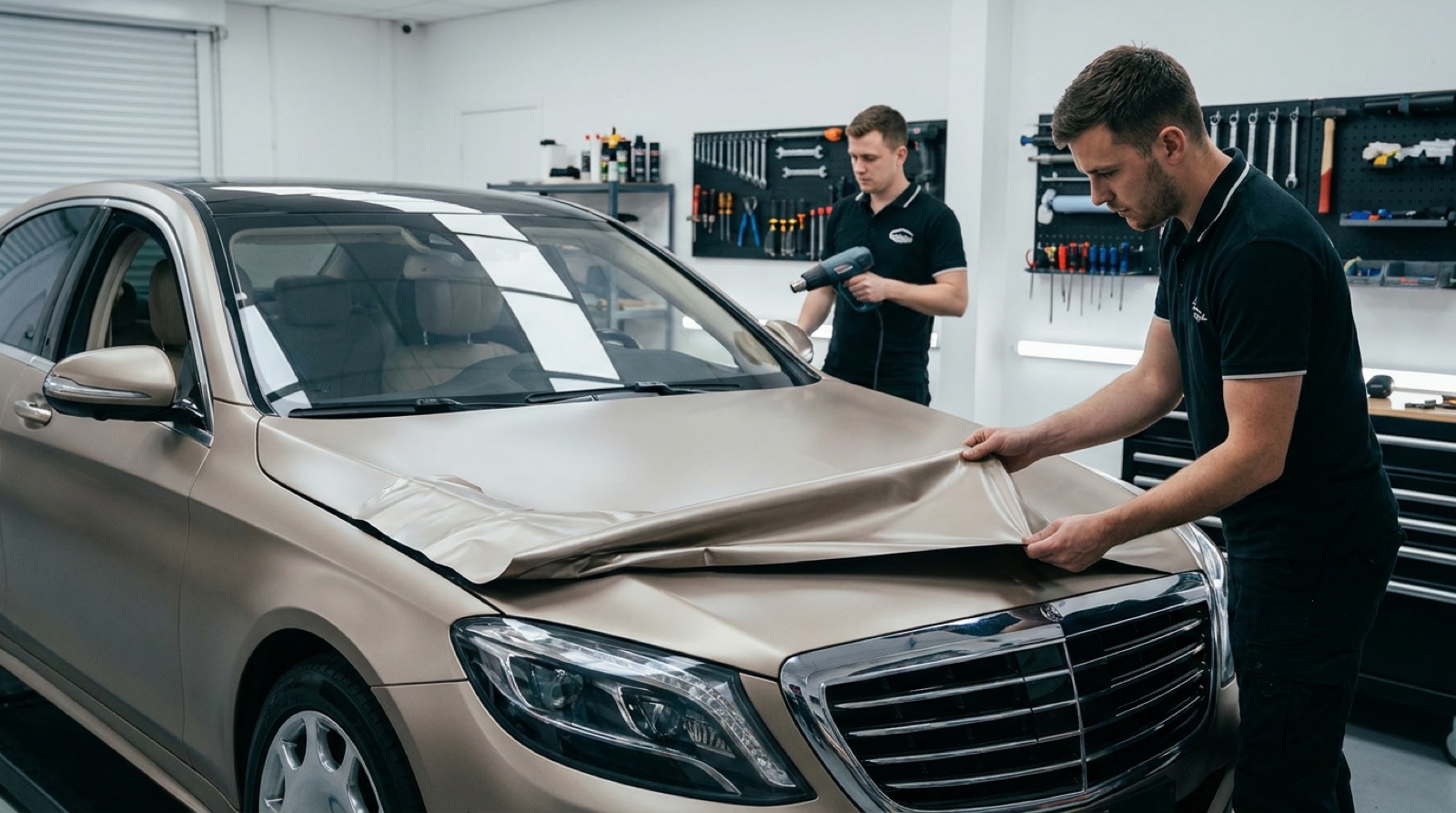
Wrap removal is one of those jobs that looks straightforward until it isn't. When the conditions are right, with premium vinyl, quality installation, and paint in good condition, removal is clean and leaves no trace. When any of those conditions are off, you can end up with adhesive residue, or worse, damaged paint. Here's how the process should go.
Professional wrap removal relies on two tools: controlled heat and patience. The adhesive on quality wrap vinyl is pressure-sensitive and temperature-responsive, when heated to the right range (typically around 40–60°C surface temperature), it softens enough to release cleanly without leaving residue or bonding aggressively to the paint beneath it.
This is also why wrap age matters. Vinyl that is within its rated lifespan (generally up to 7 years for premium film) removes cleanly. Vinyl that has been on the vehicle past its useful life has adhesive that has hardened and bonded more aggressively, making removal significantly more work and more risk to the underlying surface.
If any of the following apply, professional removal is the right call:
For a wrap that was professionally installed with quality vinyl and is within its lifespan, DIY removal on a vehicle with good factory paint is achievable. You'll need a heat gun (a hair dryer is not sufficient, it doesn't reach the required temperature), the correct adhesive remover, and patience. Budget several hours for a full vehicle.
If there's any doubt about the paint condition or the vinyl age, having it done professionally is worth the cost compared to a paint damage claim. We handle wrap removal and can also advise whether a fresh color change wrap or PPF installation makes sense afterward.
If you're approaching a lease return, schedule removal at least a week before your turn-in date. That gives you time to inspect the underlying paint, address any issues that surface, and show up to the dealership with factory paint in good condition. Read our full guide on wrapping leased vehicles for more on this.
Need your wrap removed?
We handle removal in-shop, safely, without damaging the paint underneath.