
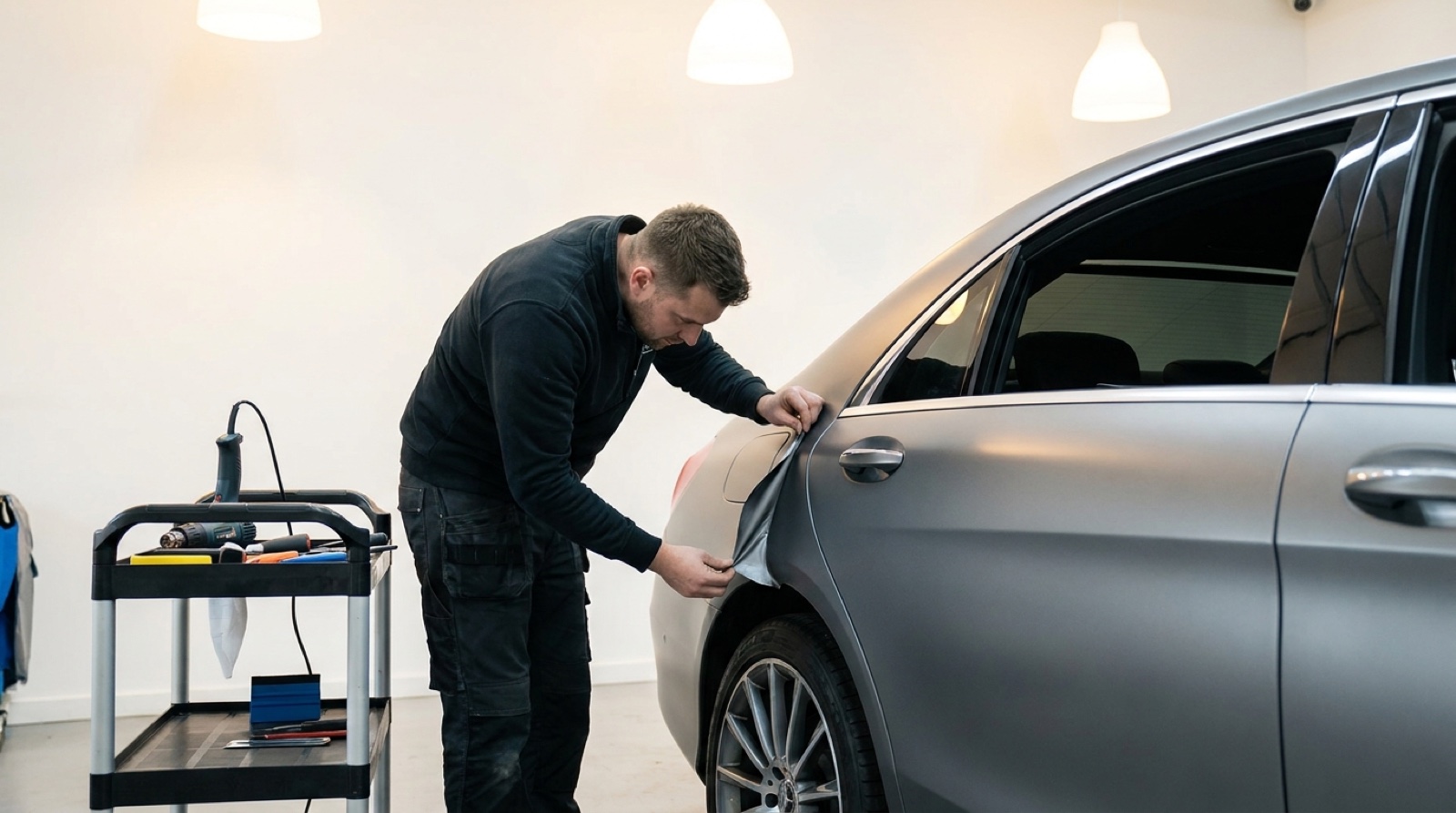
A well-installed wrap using quality vinyl shouldn't peel for years. When peeling happens early, within weeks or months, it almost always traces back to one of three root causes: poor surface prep, wrong vinyl grade, or inadequate edge finishing. Understanding which one applies tells you whether the problem is fixable or whether the wrap needs to come off and be redone.
Vinyl wrap adhesive needs a clean, dry, contaminant-free surface to bond correctly. The single most common cause of premature edge lifting and panel peeling is contamination that wasn't removed before installation: wax residue, silicone from detailing sprays, road film, or even fingerprints from handling panels during install.
Professional prep involves a full decontamination wash, clay bar treatment on contaminated surfaces, panel wipe-down with isopropyl alcohol, and allowing adequate drying time. A shop cutting time on prep to speed up turnover is setting the wrap up to fail. If your wrap started peeling within the first few months and your shop is blaming the vinyl, ask them how they prepped the surface.
Not all wrap vinyl is the same. Cast vinyl, the material used in professional installs, is thin, pliable, and has minimal memory. It conforms to curved surfaces and stays where it's placed. Calendered vinyl is stiffer, has significant memory, and wants to return to its flat shape, particularly under heat. On a vehicle parked in Kentucky summers, this means edges pulling, seams lifting, and panels that start to tent away from convex surfaces.
If your wrap is peeling broadly across multiple panels rather than at specific edge points, budget film is the likely culprit. The fix is a full re-wrap with proper cast vinyl. There's no repairing calendered film that's pulling.
Edges and seams are where peeling almost always starts. Proper edge work involves wrapping the vinyl around the panel edge and heat-setting it so the adhesive bonds fully to the wrapped-under section. This anchors the edge against lifting. When an installer cuts the vinyl flush at the edge instead of wrapping it around, or skips the post-heat treatment, that edge is held only by surface adhesion, which will eventually fail, especially at door jambs and bumper edges where the film flexes regularly.
Edge lifts caught early are often repairable: clean the lifted section, apply heat to reactivate the adhesive, and press firmly. Use a heat gun rather than a hair dryer, as you need to reach a temperature that actually softens the adhesive. If the lifted section has been exposed to dirt or moisture, clean it first before pressing down.
Not all peeling is a quality failure. A wrap that has been on the vehicle for 6 to 7 years, or less if it's been heavily exposed to direct sun, will eventually reach the end of its adhesive life. The plasticizers in the vinyl degrade over time, the adhesive becomes brittle, and lifting begins at the edges and seams. This is normal wear and not a reflection of the original installation quality.
When a wrap peels uniformly across a vehicle that's several years old, it's time to plan a full removal and re-wrap rather than attempting spot repairs on material that's past its service life. See our guide on how wrap removal works for what that process looks like.
If you're not sure which situation you're in, bring the vehicle by or send us photos and we'll give you an honest assessment. We have no interest in selling a full re-wrap when a spot repair would solve it, and equally no interest in patching a wrap that needs replacing. Get in touch and we'll tell you exactly where things stand.
Wrap peeling or lifting?
Send us photos and we'll diagnose the problem before you pay for anything.